You've Ruled Out Cry It Out. So What Actually Can You Do?
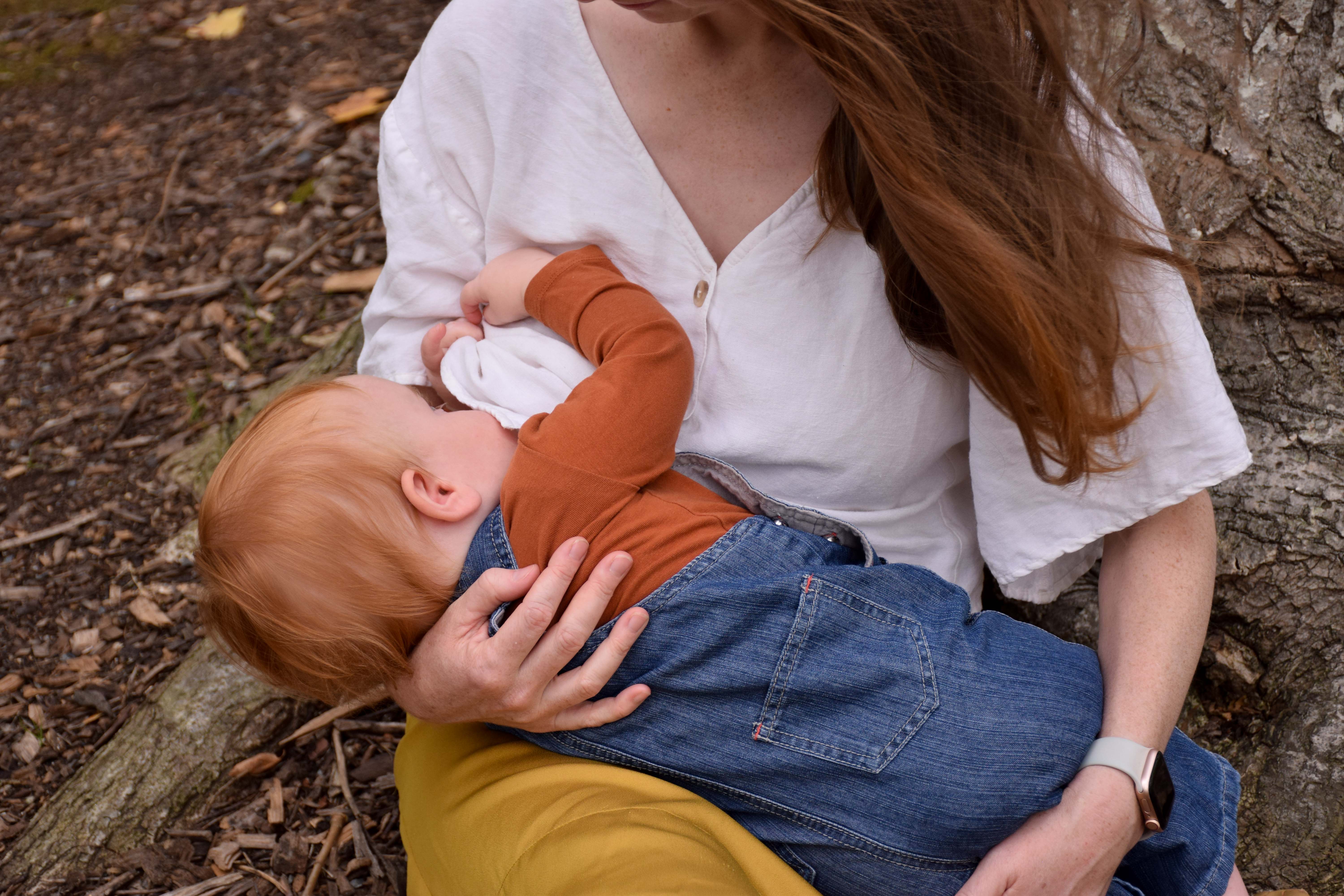
If leaving your baby to cry isn't an option for your family, you might feel like you've been left with two choices: accept broken sleep forever, or do something that doesn't feel right to you.
But there is another way.
You can work towards better sleep without ignoring your baby's cries, without forcing them onto a rigid schedule, and without trying to teach them that they don't need you.
At Signs for Sleep, I don't use sleep-training methods. Instead, I look at why sleep isn't working well in the first place, and work from there.
First things first: I don't believe sleep needs to be "trained"
Sleep is a biological function, not a skill that is taught. Our bodies are biologically driven to sleep by a chemical in our brain called adenosine, because sleep is essential for health and wellbeing.
Infant sleep is also constantly developing. Sleep architecture, sleep-wake patterns and circadian rhythms change throughout infancy, with the organisation of sleep and circadian rhythms developing substantially during the early months and years of life.¹ So when a baby or toddler is struggling with sleep, I don't start from the assumption that they need to be taught how to sleep.
I start with a different question: What's getting in the way of sleep happening easily?
That might be their individual sleep biology, sleep pressure, developmental stage, environment, temperament, feeding, discomfort, their individual sleep needs — or a combination of several things. And that's why I don't believe there is one generic schedule or one magic method that works for every child.
Your child's sleep isn't a behaviour problem
If your baby wakes at 2am and calls for you, I don't see that as a behaviour that needs to be extinguished.
I see it as communication. Your baby is telling you something. They might be hungry. They might need comfort. They might be uncomfortable. They might be experiencing a developmental change. They might simply need some help getting back to sleep.
The important thing is working out what's actually happening, rather than automatically assuming the answer is to teach them not to call for you.
This is one of the biggest differences between my approach and traditional sleep-training approaches. I'm not trying to make your baby conform to a predetermined sleep schedule.
I'm trying to understand your baby and work with their biology.
So what can you actually do?
Quite a lot.
But there isn't one universal "gentle method" that I can give every family. Instead, we start with the whole picture.
1. Work out what your family's actual goal is
Before we make any changes, I want to know what you're actually hoping to change. Because "better sleep" doesn't look the same for every family.
Maybe you have to rock your baby for 30 minutes every time they go to sleep, and your back simply can't handle it anymore.
Maybe you want a little more flexibility in your day, but your baby needs to be in their cot, in a pitch-black room, at exactly 1:37pm, with you patting their bottom for the first 20 minutes — otherwise they won't nap.
Maybe you don't mind getting up twice a night to feed your baby, but bedtime is taking two hours and leaving you with no evening.
Or perhaps your child is sleeping reasonably well, but you're exhausted by having to follow such a rigid routine that you can't leave the house without worrying that the whole day's sleep will fall apart.
There is no single definition of "good sleep".
Your goal might be fewer night wakes. It might be a shorter bedtime. It might be being able to settle your baby without a particular method that is no longer sustainable for you. Or it might simply be having more flexibility and confidence around your child's sleep.
My job isn't to decide what your goal should be. It's to help you understand what is realistic and developmentally appropriate for your child, and then work with you towards a goal that works for your family.
And sometimes that means helping you understand that your ideal and your child's biological need for sleep aren't quite the same thing.
Infant sleep varies considerably between children, and even from night to night within the same child. Six-month-olds show substantial night-to-night variability in their longest stretch of uninterrupted sleep,² and in a study of more than 55,000 infants, night waking was found to be common at six months.³
That doesn't mean you have to accept a situation that isn't working for you. It means we find the most realistic path towards the sleep you want, while still respecting the biology of the child you actually have.
2. Look at the whole 24 hours
Before changing how your child settles, I'd want to understand their sleep across the entire day.
How much sleep are they getting?
How much sleep do they actually need?
When are they napping?
How much sleep pressure are they building between sleeps?
Are they going to bed with enough sleep pressure to sustain a longer stretch?
Are they potentially being asked to sleep more than their individual biology requires?
This is why I don't hand families a generic schedule and expect their baby to fit into it. Your child's sleep needs are individual. We can work with their biology rather than constantly trying to override it.
3. Separate sleep goals from feeding goals
This is a really important one.
If your baby feeds to sleep and wakes frequently overnight, you might have been told:
"You need to stop feeding to sleep."
But what if feeding to sleep isn't actually the problem you want to solve?
Maybe you don't mind feeding your baby back to sleep. You just want to do it twice a night instead of five times. Those are two completely different goals. And stopping feeding to sleep doesn't automatically mean your baby will stop waking.
In a study of 715 infants aged 6–12 months, 78.6% regularly woke at least once per night. Babies who received more milk or solid food during the day were less likely to feed at night, but they were not less likely to wake.⁴
So if your baby is waking frequently, we need to separate the questions:
How often are they waking?
and
How are they getting back to sleep?
If feeding to sleep is working well for your family, there's no rule saying you have to stop simply because someone has told you it's a "bad habit".
And if it isn't working for you anymore, that doesn't mean you've done anything wrong either.
If you do want to move away from feeding to sleep because it's no longer sustainable for you, we can work on that too. Rather than abruptly taking away something your baby relies on for comfort, we can introduce another form of comfort alongside it and gradually build on that.
You don't have to remove one source of comfort before you've established another.
4. Look for the root cause
Sometimes the answer isn't behavioural at all.
If something about your child's sleep doesn't seem right, I want to consider whether there could be an underlying issue that needs further investigation.
That might mean looking at things such as:
breathing or persistent mouth breathing
possible iron deficiency
body tension
feeding difficulties
illness or discomfort
developmental changes
environmental factors
As a sleep coach, I'm not there to diagnose medical conditions — but part of responsible sleep support is knowing when something sits outside my scope and a referral to another health professional may be appropriate.
Before we try to change sleep, we want to make sure we're not trying to solve the wrong problem.
But what if my baby cries?
This is probably one of the biggest fears parents have when they're considering making changes.
And I want to make something really clear:
Responsive sleep support doesn't mean your baby will never cry.
Crying is communication.
Babies and children are allowed to be upset. They're allowed to have big feelings when something changes or when they don't get what they want. What matters is how we respond to those feelings.
Imagine your partner woke from a nightmare and wanted a cuddle. Or they had a terrible day and came to you crying because they needed comfort. You wouldn't tell them: "You're going to have to learn to deal with this yourself." You'd probably stay with them. Listen. Offer a cuddle. Help them through it.
Our babies and toddlers deserve that same sense of safety.
We don't need to ignore crying or leave a baby alone with it in order for them to learn that their feelings are manageable. They can experience disappointment, frustration and sadness while knowing: I'm safe. I'm loved. My parent is here.
Responsive doesn't mean "anything goes"
This is another important distinction.
Being responsive doesn't mean you can never have boundaries. Sometimes a parent may decide:
"I'm happy to feed my baby twice overnight, but I'm not comfortable feeding every time they wake."
That's a completely valid boundary. And if your baby becomes upset when you hold that boundary, you don't have to remove the boundary — but you can be there for them while they feel their feelings.
You might cuddle them.
Talk to them.
Offer another form of comfort.
Let them know you're there.
The message isn't:
"You can't be upset."
It's:
"You can be upset, and I'm going to help you through it."
That's a very different experience from being left alone to cry until they stop calling for you.
What if I change my mind?
That's okay too.
One of the things I tell parents is that you don't have to keep doing something that isn't working for you simply because you've started it.
If an approach doesn't feel right for you or your child, we can change direction. The only thing I'd encourage is trying not to constantly change tactics because you're worried something isn't working after one night. Sleep changes can take time. If we're continually moving the goalposts, it can be harder to understand what's actually helping.
But if you've given something a reasonable chance and it isn't working? We reassess. We learn from what's happening and come up with another approach that feels better for your family.
There is no prize for sticking with a strategy that makes everyone miserable.
You don't have to choose between connection and sleep
I don't believe parents should have to choose.
I want to tell you something nobody told me when I was in the thick of exhausted, desperate, 37-minute-nap and multiple-night-wake survival mode as a first-time parent.
Your baby not sleeping through the night doesn't mean you've failed, and you don't have to leave them to cry to fix it. For a long time I felt like those were my only two options — either my baby should magically be sleeping through, or I needed to toughen up and let him cry it out.
Every sleep consultant account I came across seemed to push methods that made my stomach turn, even ones who labelled their methods 'gentle', which was really just cry-it-out in disguise. Often they would rebrand it as 'controlled crying', 'graduated extinction' or 'modified Ferber'. So instead of giving up, I went looking for another way — I dove deep into sleep biology, infant development, and what's actually biologically normal for a baby's sleep, and became genuinely passionate about what I found: gentle, responsive approaches that work with your baby's development rather than against it.
You can want more sleep and want to respond to your baby.
You can want your evenings back and want your little one to feel safe and connected.
You can set boundaries and be loving and responsive.
You can make changes without leaving your baby to cry alone.
And you don't have to train your baby to stop needing you before you can get better sleep.
Instead, we can look at the biology underneath their sleep, understand what's realistic for your particular child, identify what's getting in the way and make changes that work with, rather than against, your child. Because the goal isn't to make your baby fit a sleep schedule.
The goal is to help sleep come more easily and naturally — in a way that works for your whole family.
Need help working out where to start?
If you just want a sense check on whether what you're seeing is normal — and one or two clear things you could try tonight — a Sleep Sense-Check call is exactly what it's for. 45 minutes, one specific question, a clear next step.
If you're exhausted but don't want to use cry-it-out or traditional sleep-training methods and want ongoing, personalised support, Sleep Coaching is there for that — for babies and toddlers up to 4 years, looking at your child's individual sleep biology, needs, temperament, development and environment, working together towards a realistic goal for your family.
No cry it out. No Ferber. No extinction methods. Ever. Just gentle, responsive support — with connection at the centre.
Explore Sleep Coaching Packages →
Sources
Galland, B.C. et al. (2012); Mirmiran, M. et al. (2003) — infant sleep architecture, sleep-wake patterns and circadian rhythms change substantially throughout infancy, with the organisation of sleep and circadian rhythms developing over the early months and years of life.
Pennestri, M-H. et al. (2020) — six-month-olds showed substantial night-to-night variability in their longest stretch of uninterrupted sleep.
Hysing, M. et al. (2014) — in a study of more than 55,000 infants, night waking was common at six months.
Brown, A. & Harries, V. (2015) — in a sample of 715 infants aged 6–12 months, 78.6% regularly woke at least once a night; more daytime milk or solid food reduced night feeds, but not night wakings.